
Roof Flashing Repair Port Charlotte FL — Transition & Joint Waterproofing
Flashing protects the most vulnerable points on any roof — the transitions where the roof surface meets walls, valleys, chimneys, skylights, and vent equipment. When flashing lifts, corrodes, or loses its seal, water enters behind otherwise intact roofing materials. We repair and replace all types of metal roof flashing across Port Charlotte properties.
About Our Professional Roof Flashing Repair Services in Port Charlotte FL
Roofing surfaces are designed to shed rain, but joint transitions where slopes meet sidewalls, chimneys, or valleys carry the heaviest concentration of water flow. In Southwest Florida, salt air from Charlotte Harbor and high thermal expansion degrade thin metal flashing and dry out polyurethane sealants.
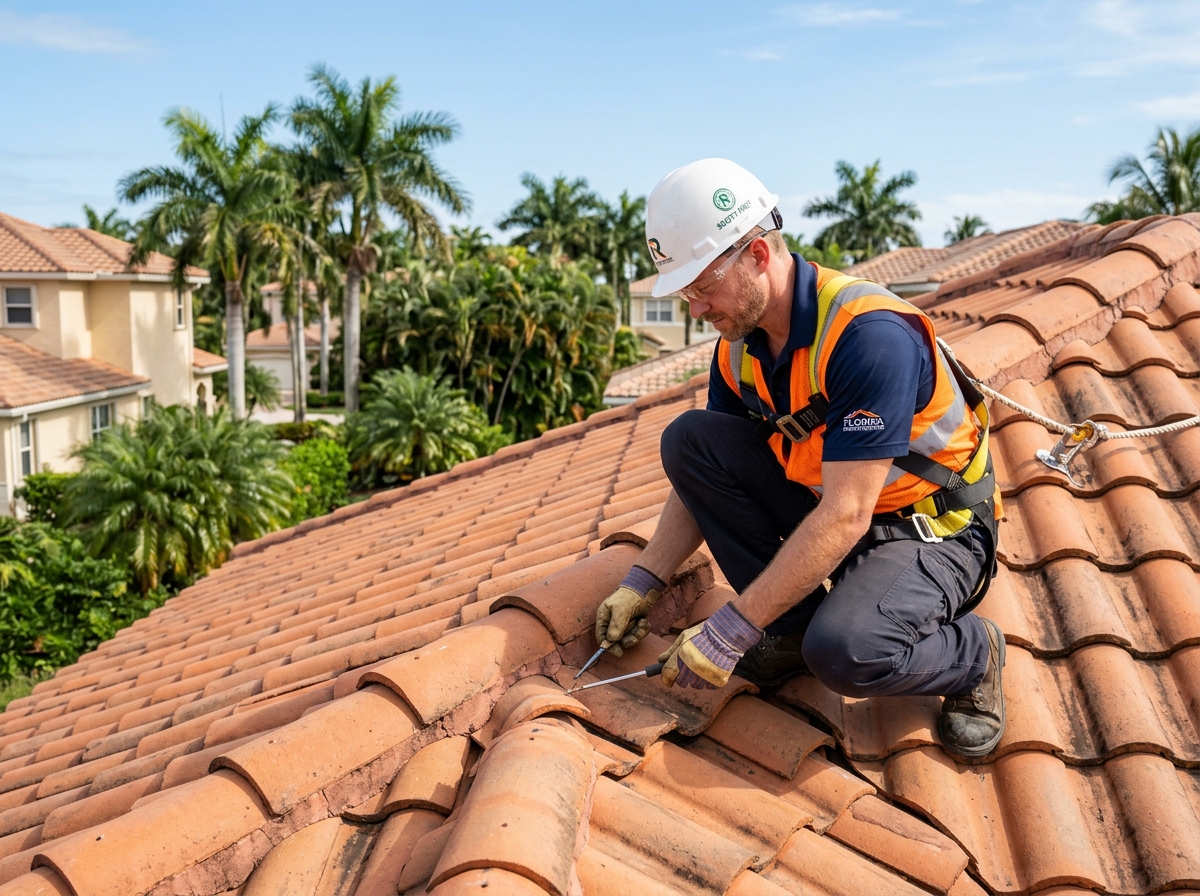
Our licensed Port Charlotte flashing repair team rebuilds compromised transition joints. As trusted licensed roofing contractors in Port Charlotte, we remove rusted metal, install heavy-gauge aluminum or copper step flashing, embed counter flashing into stucco reglets, and lay self-adhering ice & water shield underlayment behind all joint angles.
Signs of Compromised Roof Flashing
Flashing failures often produce leaks that seem unrelated to the visible roof surface — because water enters at transition points and travels behind roofing materials before appearing indoors.
Water Stains Appearing Near Walls
Leaks at roof-to-wall transitions are classic flashing failures. Water enters behind step flashing or counter flashing and runs down interior drywall, staining ceilings and upper wall corners.
Visible Rust, Corrosion, or Lifting Flashing Metal
Corroded or lifted flashing has lost its ability to redirect water properly. In Port Charlotte, salt air and high humidity accelerate metal corrosion — particularly on low-grade galvanized steel flashing.
Leaks That Appear Only During Wind-Driven Rain
When leaks occur only during storms with strong wind, flashing failures are a primary suspect. High winds force rain upward behind flashing that functions properly during vertical rainfall.
Dried or Crumbling Sealant at Flashing Joints
Sealants at flashing terminations and overlaps deteriorate from UV exposure and thermal movement. When sealant cracks or pulls away, the joint is no longer watertight.
Flashing Issues You Can Spot From the Ground
You can check for flashing warning signs safely from your yard without climbing onto your roof.
Look at Roof-to-Wall Connections From the Yard
Separated, bent, or rusted flashing along wall transitions may be visible from ground level, especially on two-story homes.
Check Staining on Exterior Walls Below Roofline
Dark streaks or stucco discoloration on walls just below roofline intersections can indicate water running behind failed flashing.
Note When Leaks Occur Relative to Wind Direction
Leaks that only appear during wind-driven rain from a specific direction often point to flashing failures on that side of the home.
Types of Roof Flashing and Where They Fail
Different types of flashing serve distinct waterproofing functions. Each has its own failure modes and repair requirements in Port Charlotte.
Step Flashing
Installed where roof slopes meet vertical walls in an L-shaped stepped pattern interlocking with shingle or tile courses. Failures occur when individual metal pieces corrode, lift, or when wall sealants pull away.
- Lifted or bent aluminum step pieces
- Corroded metal along wall line
- Dried sealant at flashing-to-wall joint
Valley Flashing
Installed beneath roofing materials where two roof slopes intersect to form a valley water channel. Valleys carry the highest volume of water during severe storms, making valley corrosion extremely destructive.
- Corroded or perforated valley metal
- Debris restricting valley water flow
- Sealant failure along valley edge courses
Drip Edge
Installed along eave and rake edges to direct water runoff into gutters and prevent rain from wicking backward beneath fascia boards. Missing or bent drip edge causes fascia and soffit wood rot.
- Missing or improperly lapped drip edge metal
- Bent or crushed edge metal from storm impact
- Rotting fascia and soffit wood beneath failed drip edge
Counter Flashing
Overlaps step flashing to create a two-piece watertight seal along brick chimneys and stucco walls. Embedded directly into wall reglets. When counter flashing separates, water flows behind step flashing.
- Separated counter metal from stucco reglet
- Cracked mortar at wall embedment
- Lifted or curled lower metal edges
Why Surface Sealant Is Not a Flashing Repair
One of the most common mistakes in roofing is treating a flashing failure with a thick layer of caulk or roofing cement over the affected metal. While this may stop a leak temporarily during light rain, it doesn't correct the underlying physical failure — and it often traps moisture, accelerating wood rot underneath.
Proper flashing repair involves identifying why the metal failed — corrosion, lifting, improper overlap, or thermal expansion — and correcting the physical metal assembly. This requires removing surrounding shingles or tiles, installing new corrosion-resistant metal, laying self-adhering membrane liners, and re-interlocking roofing courses.
For roofing transitions in Port Charlotte, where wind-driven rain puts severe hydraulic pressure on wall joints, licensed roofing contractors in Port Charlotte address the structural metal installation rather than masking it with temporary caulking.
How Flashing Repairs Are Completed
A technical 4-step workflow to inspect, rebuild, and seal metal flashing joints in Port Charlotte.
Identify Flashing Type & Failure Mode
We determine which flashing component has failed — step, counter, valley, drip edge, or penetration flashing — and identify how it failed: corrosion, lifting, separation, or sealant deterioration.
Access the Flashing Detail
Accessing failed flashing requires carefully lifting adjacent shingles or tiles. We work to minimize disturbance to intact components while gaining proper access to the underlying metal joints.
Replace or Correct Metal Flashing
Corroded or damaged flashing is replaced with heavy-gauge aluminum or copper material appropriate for Southwest Florida coastal conditions, properly lapping all metal joints.
Seal, Reintegrate & Verify
We apply high-grade polyurethane sealants at termination points, restore lifted roofing materials, and verify that the repaired transition cleanly redirects water into the drainage path.
Roof Flashing Repair FAQ
Answers to common questions about step flashing, metal corrosion, wall leaks, and sealants in Port Charlotte.
What exactly does roof flashing do?
Flashing is sheet metal installed at transitions where the roof surface meets another structure — walls, chimneys, skylights, valleys, and edges. It redirects water away from these vulnerable joints by channeling it back onto the roof surface and into the drainage path. When flashing fails, water enters behind the roofing materials.
Can flashing be repaired without removing surrounding roofing material?
It depends on the flashing type and location. Some flashing repairs — such as resealing a counter flashing joint — can be done without disturbing roofing materials. Others — like replacing step flashing at a roof-to-wall transition — require lifting or removing adjacent shingles or tiles to access and properly install the new flashing.
Why does my roof leak only at certain wall transitions?
Different transition points on a roof are exposed to different water volumes and wind patterns. A transition on the windward side of the home may be subjected to wind-driven rain that forces water upward behind the flashing, while transitions on protected sides may never show problems.
How long does roof flashing typically last in Southwest Florida?
Metal flashing lifespan depends on the material. Galvanized steel flashing is susceptible to corrosion in Port Charlotte salt air and humidity. Aluminum flashing resists corrosion better but can fatigue from thermal cycling. The sealants used with flashing typically fail before the metal itself.
Can I seal leaking flashing with caulk or roofing cement?
Surface sealants are temporary measures at best. They don't address the underlying flashing failure — whether it's lifted metal, corroded material, or improperly lapped joints. Proper flashing repair involves correcting the physical installation.
Related Flashing Services in Port Charlotte
Flashing repairs often involve related structural components. Explore related services for more information.
Tracing Flashing-Related Leaks
Attic thermal moisture tracing and wall leak origin detection. Learn More →
Flashing Under Tile Roofs
Replacing metal valley liners and pan flashing beneath concrete barrel tiles. View Details →
Penetration Flashing Repair
Plumbing vent stack lead boots, chimney aprons, and exhaust vent collars. Read More →
Serving All 7 Port Charlotte ZIP Codes for Flashing Repair
We dispatch flashing repair technicians daily across all Port Charlotte neighborhoods as well as Punta Gorda roof repair projects, North Port FL, and Englewood FL.
Suspect Leaking or Damaged Roof Flashing? Schedule an Inspection
If you're seeing water stains near roof-to-wall transitions, corroded or lifted flashing, or leaks that appear only during wind-driven rain — contact us for a professional flashing evaluation. We'll identify the failure point, explain the repair, and provide a written estimate.

Ready for Expert Roof Flashing Repair in Port Charlotte?
Get your metal flashing inspected by licensed local technicians. We provide heavy-gauge aluminum step flashing, copper valley liners, counter-flashing reglets, and 10-year waterproof warranties.